
Marine Engine Room Hose Protection
Yacht with Twin Caterpillar Engines
The Challenge
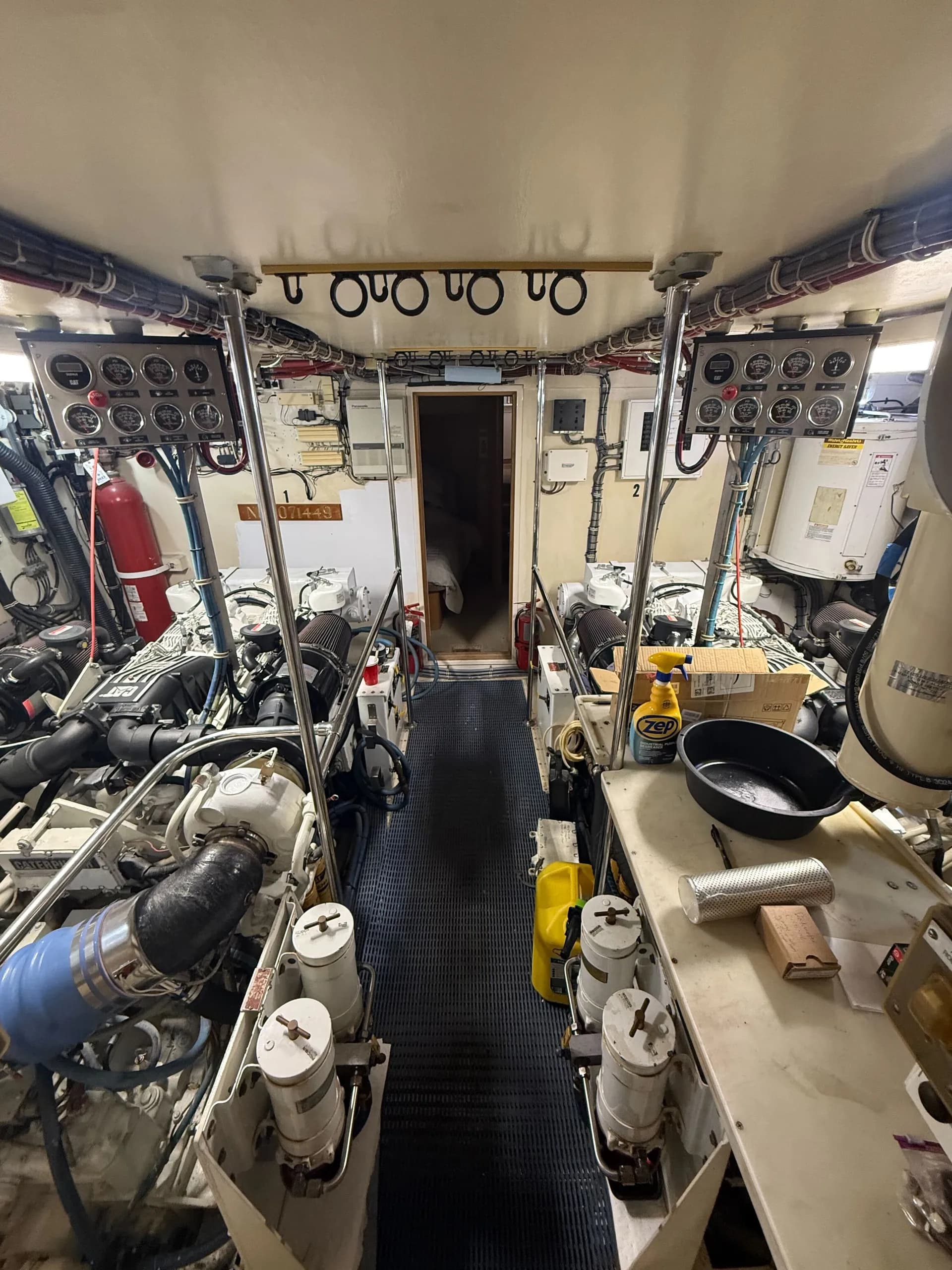
A yacht owner with twin Caterpillar diesel engines needed to protect hydraulic hoses in a cramped marine engine room. The hoses ran through tight spaces between engines, bulkheads, and structural frame members — constantly rubbing against metal edges during engine vibration and vessel movement.
Marine engine rooms present unique challenges: extreme heat from the engines, constant vibration underway, salt air corrosion, and very limited access for maintenance. Any hose failure in this environment means not just costly repairs, but potential safety hazards at sea — far from a repair shop.
The owner needed a solution that was quick to install without disconnecting hoses, durable enough for the marine environment, and easy to inspect visually in a dimly lit engine room.
Photo Gallery
Engine room overview — tight walkway between twin Caterpillar engines
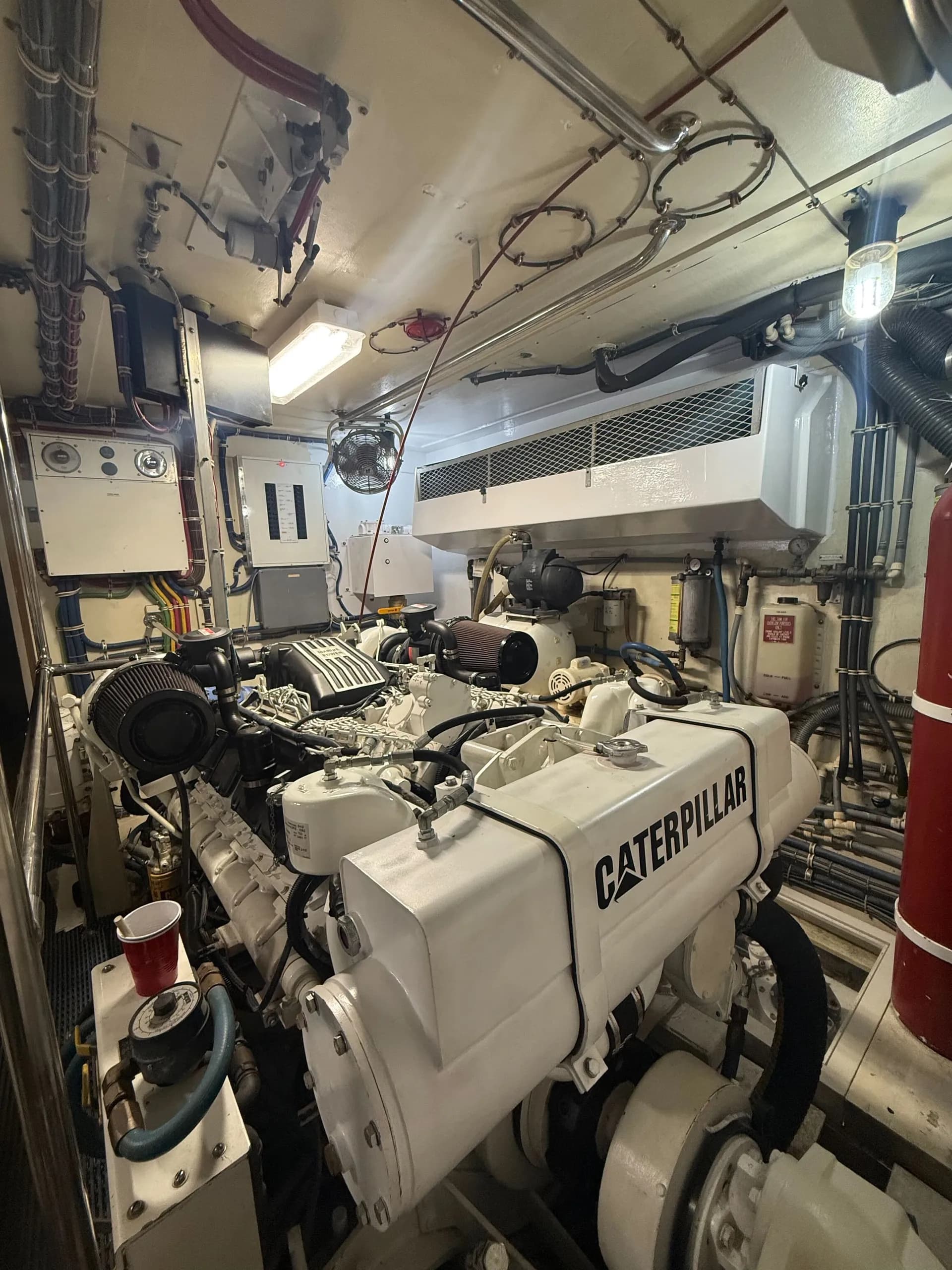
One of the twin Caterpillar diesel engines with surrounding hose runs
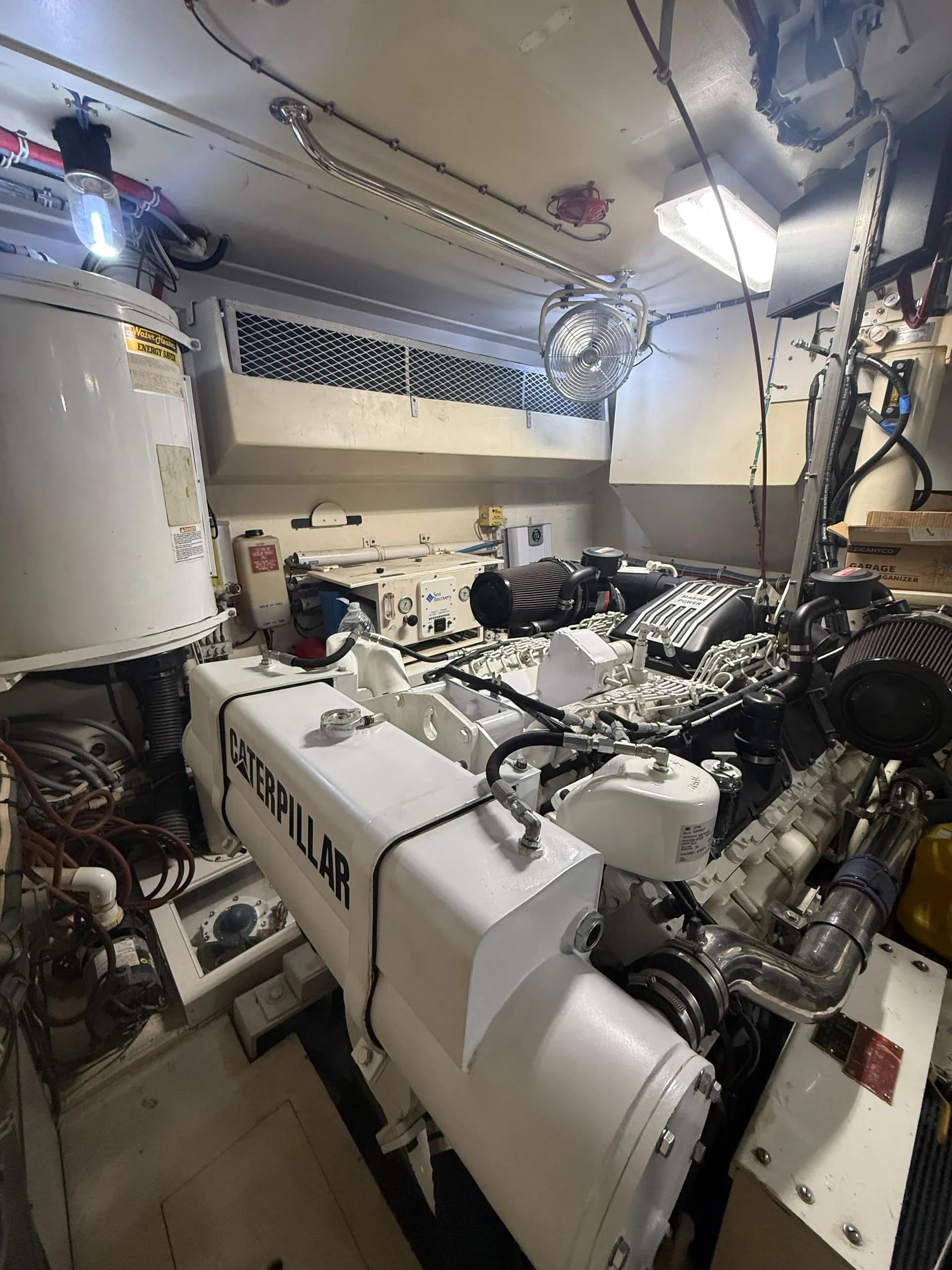
Full engine room view showing the dense mechanical environment
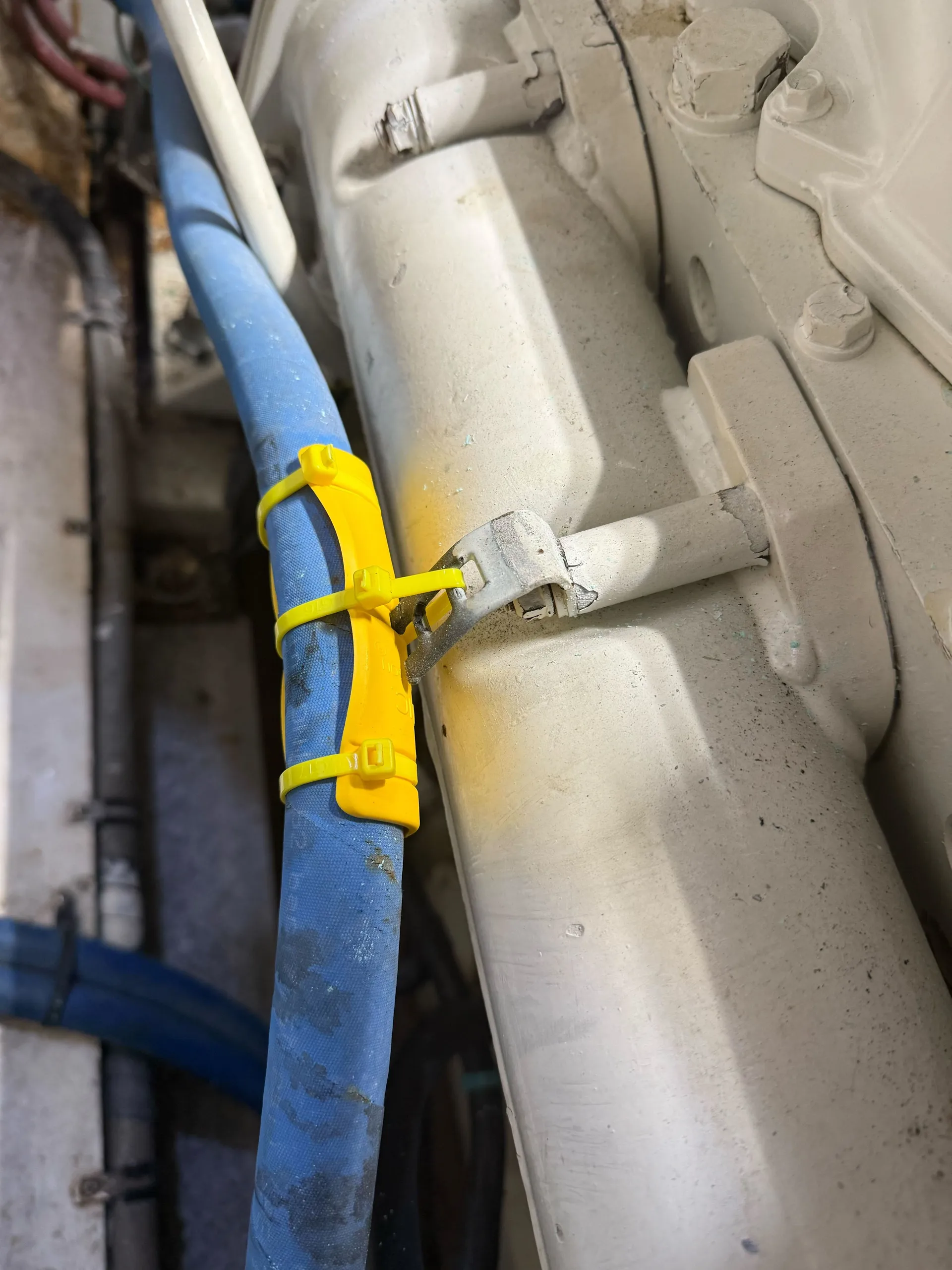
Yellow protector guarding a hose at a metal bulkhead contact point
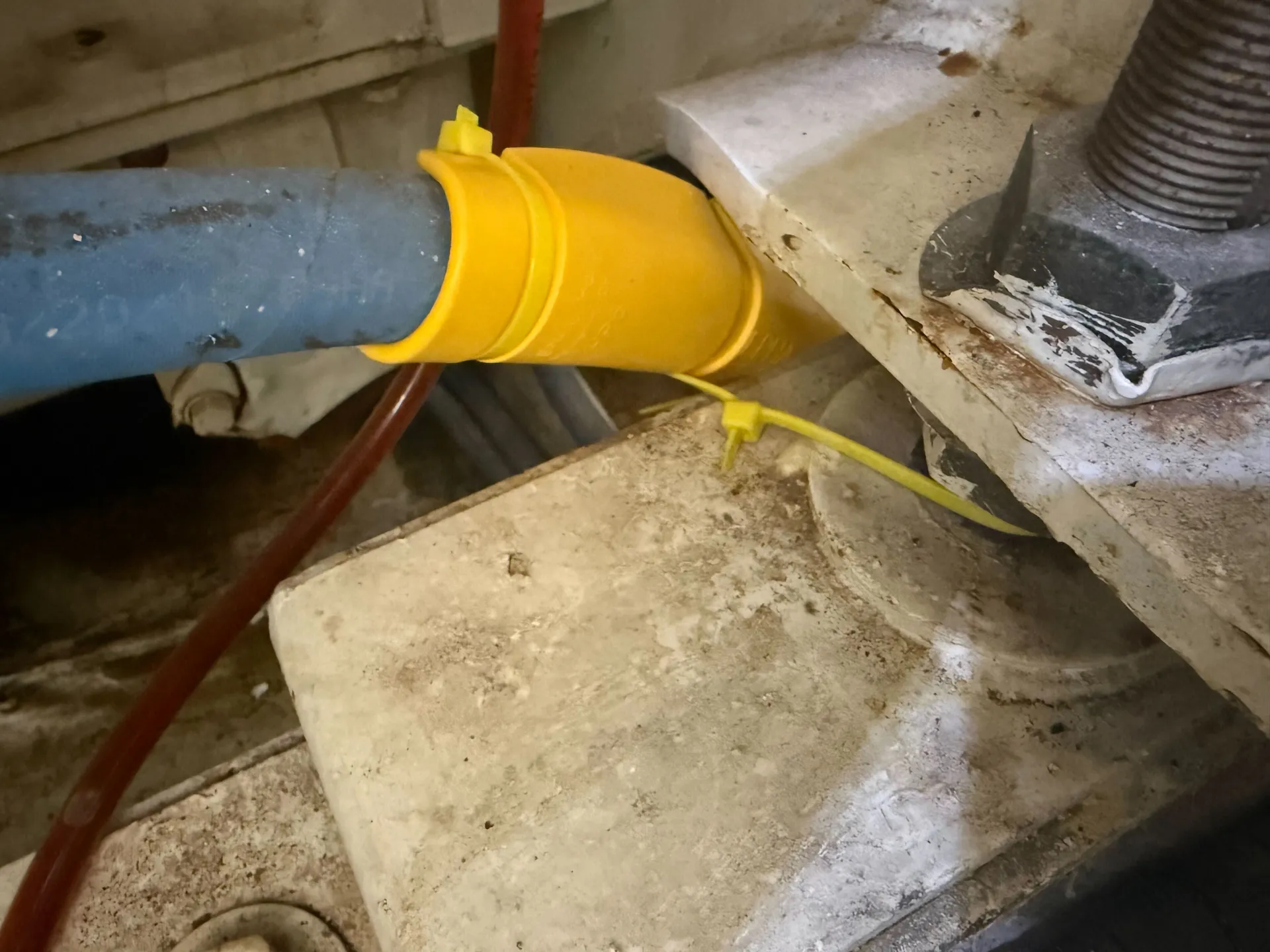
Protector secured with cable ties where a hose passes over a metal edge
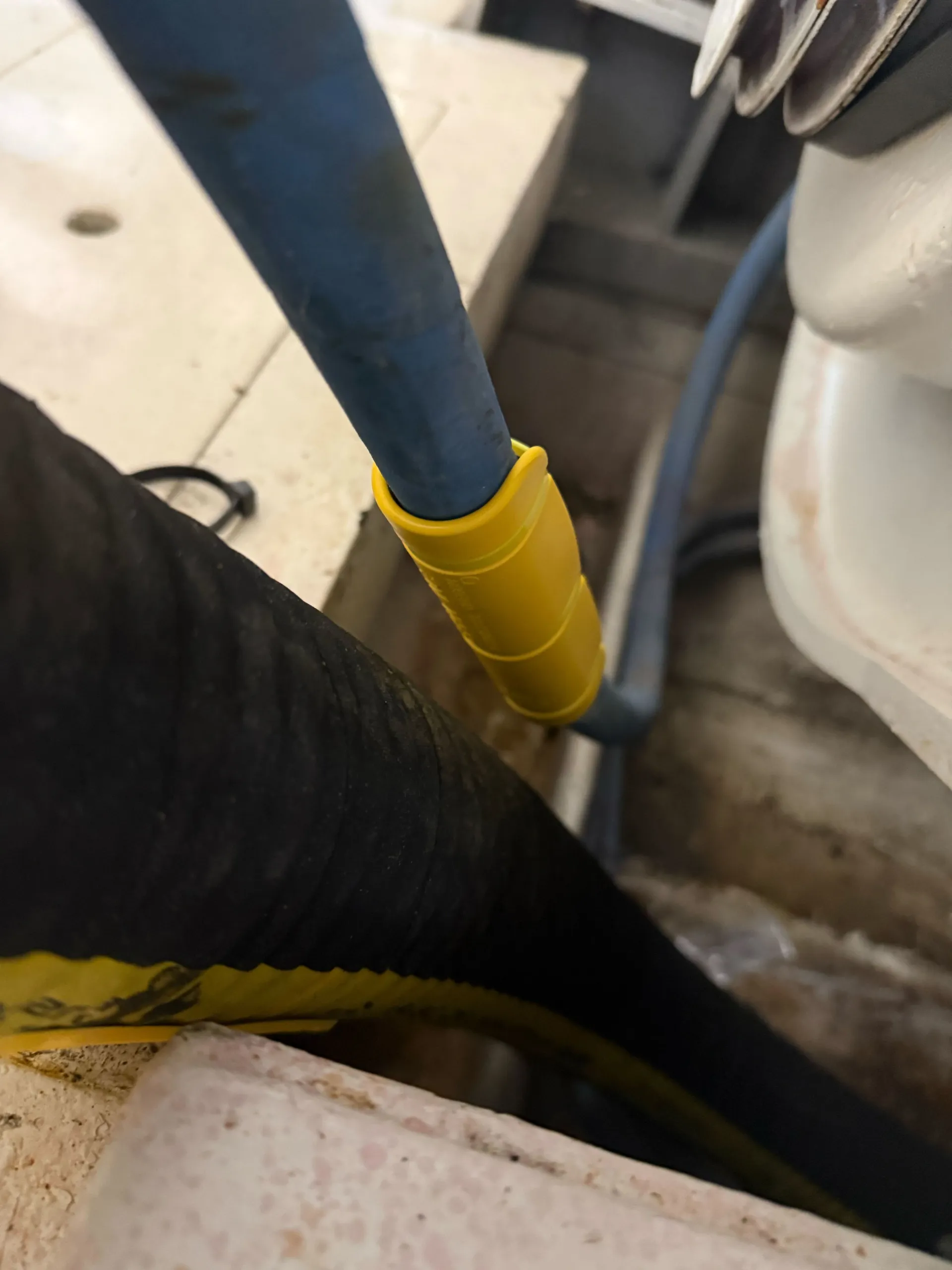
Close-up showing the cable tie securing method in the protector grooves
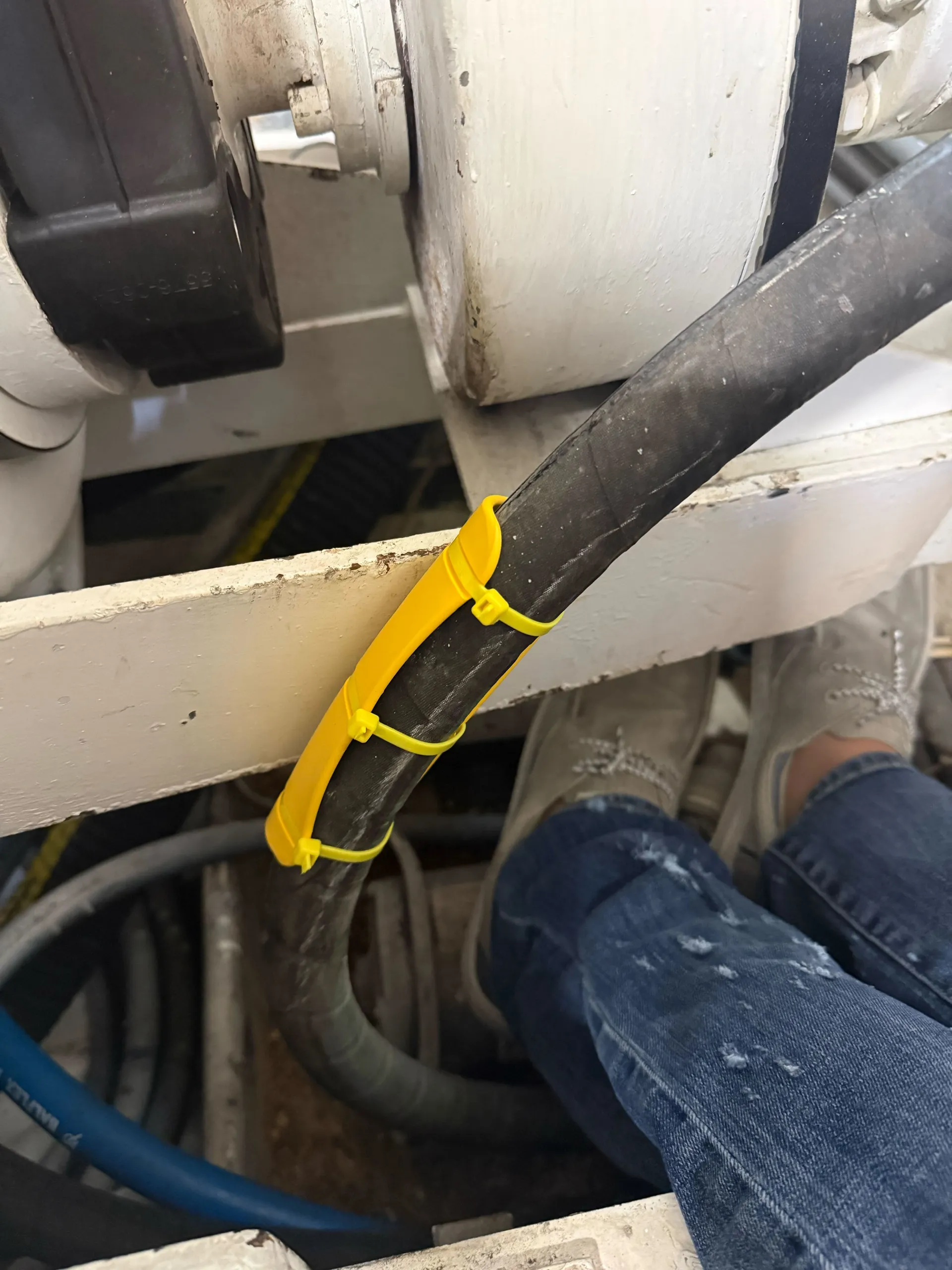
Protector preventing abrasion where the hose contacts a structural frame member
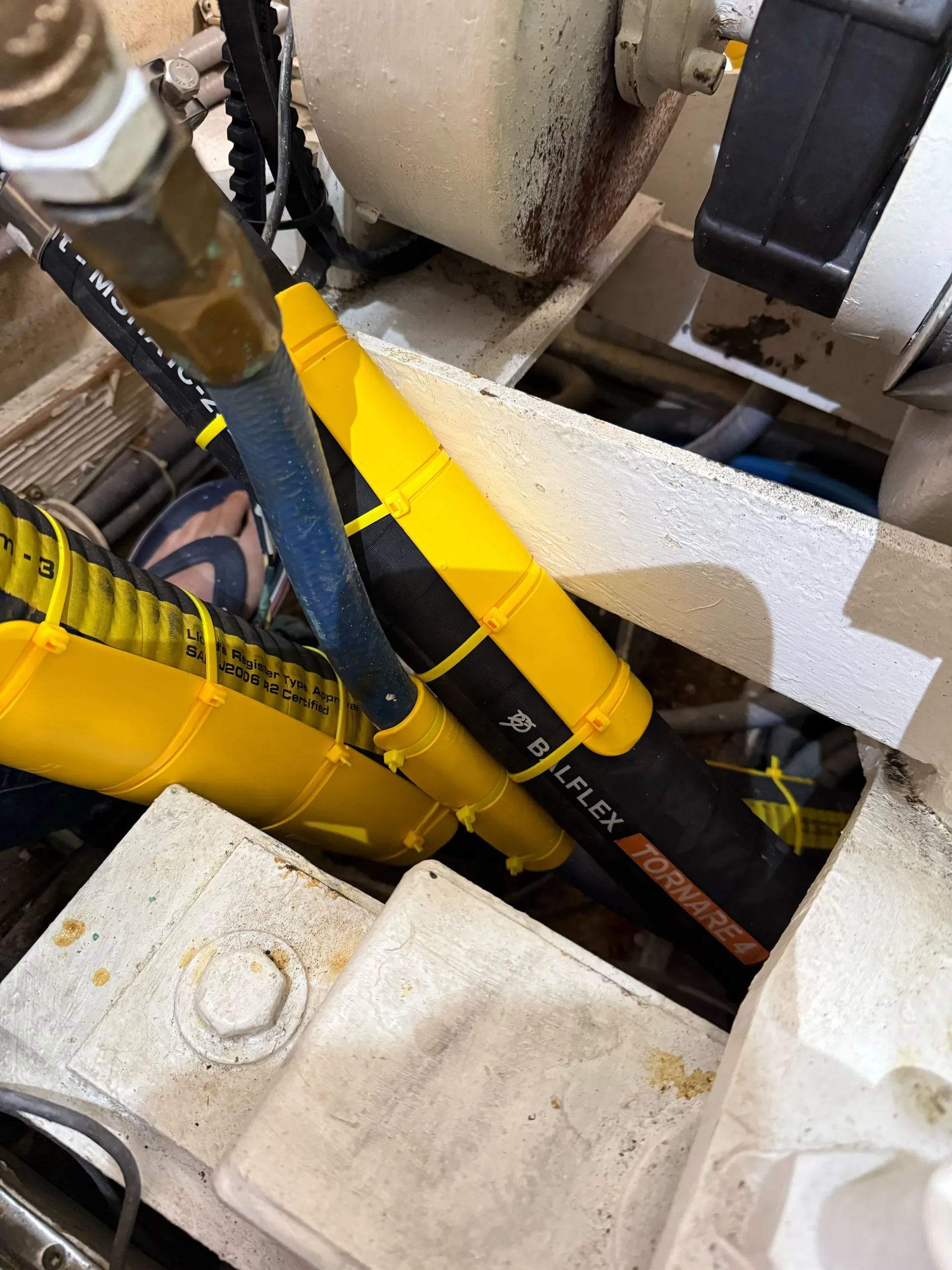
Hose runs alongside the engine — key areas identified for protection
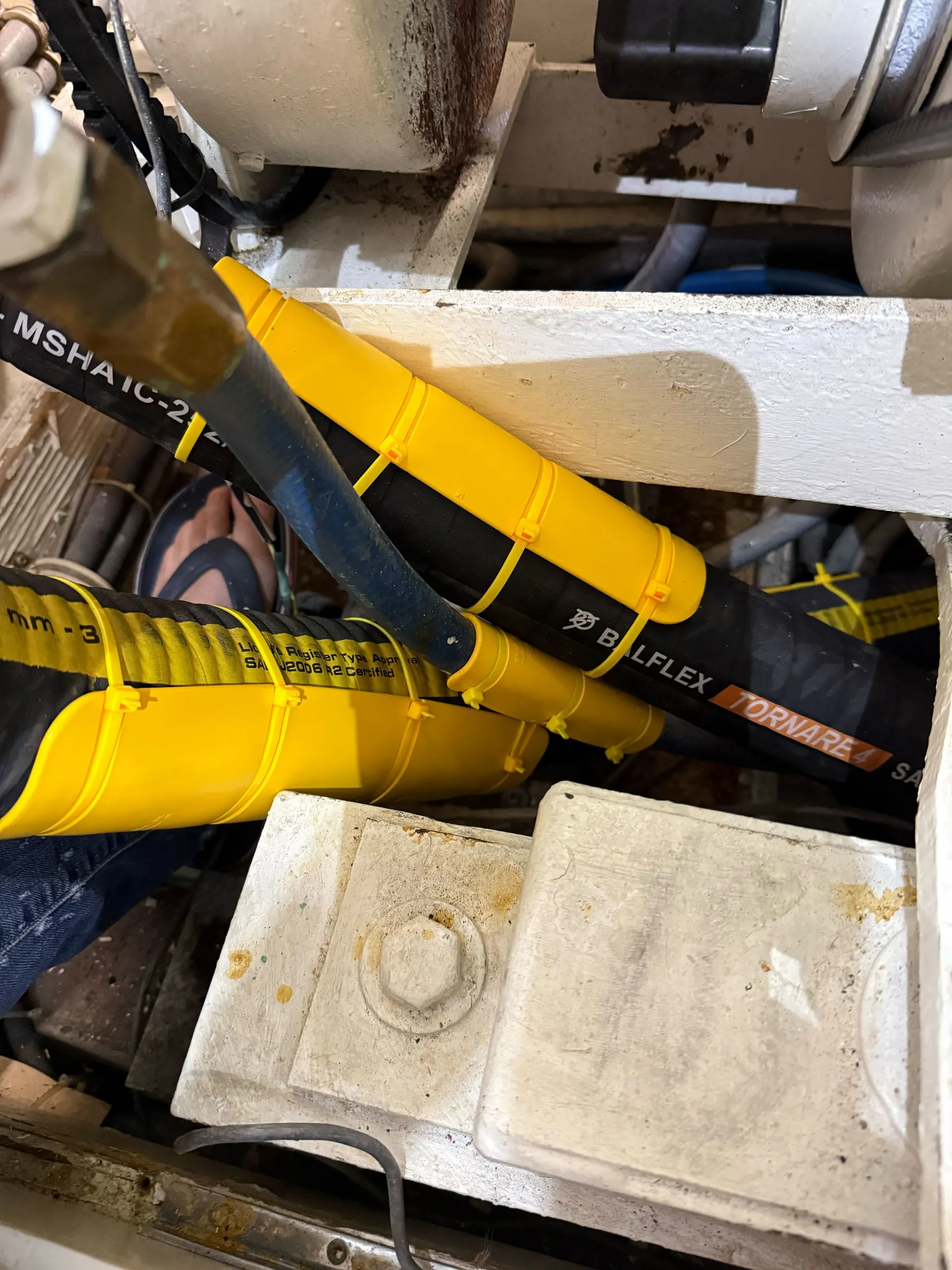
Protector on a Balflex SAE 100R4 hose at a bend point near the engine block
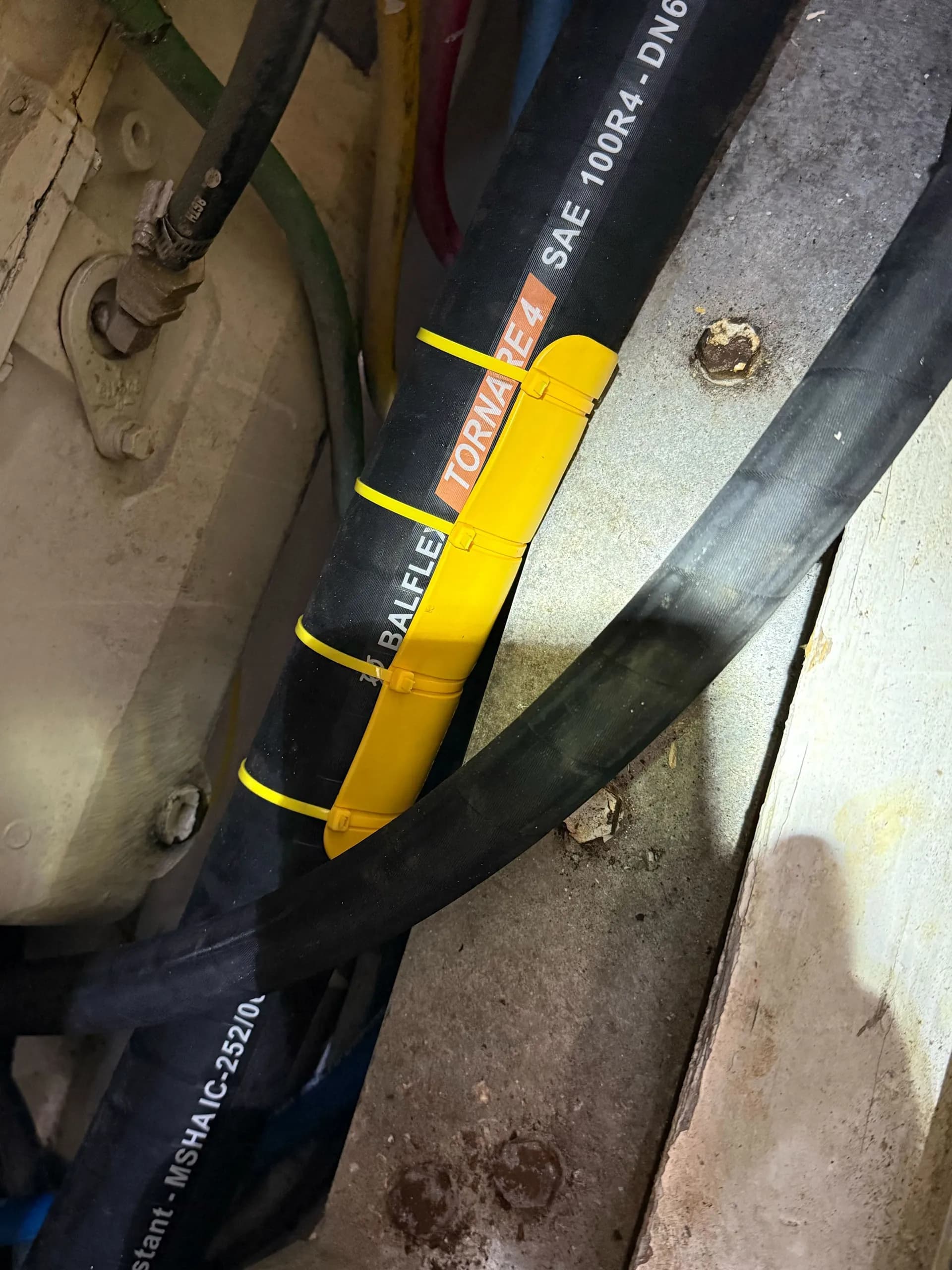
Completed installation on a Balflex hydraulic line with color-matched cable ties
The Solution
We installed yellow EPHA hose protectors at every contact point where hydraulic hoses touched metal surfaces — bulkheads, frame members, and engine mounts. Yellow was chosen for two important reasons:
High-visibility inspection: In a dimly lit engine room, bright yellow protectors are immediately visible during routine checks. The crew can quickly confirm every protector is in place and spot any that have shifted or show wear — without needing to trace each hose by hand.
Caterpillar color coordination: Yellow matches the Caterpillar engine brand color, giving the installation a clean, professional appearance that the yacht owner appreciated. It looks intentional and well-engineered, not like an afterthought.
Each protector was secured using yellow cable ties in the molded grooves — no drilling, no hose disconnection, and no special tools required. The entire installation was completed during a single service visit with the hoses still pressurized and connected.
Results
- Full protection at all metal contact points — bulkheads, frame members, and engine mounts
- High-visibility yellow for quick visual inspections in the engine room
- Color-matched to Caterpillar engines for a professional, clean appearance
- Installed in under an hour without disconnecting any hoses
- Heat and abrasion resistant — rated for the marine engine environment
- No modifications to the vessel or hydraulic system required